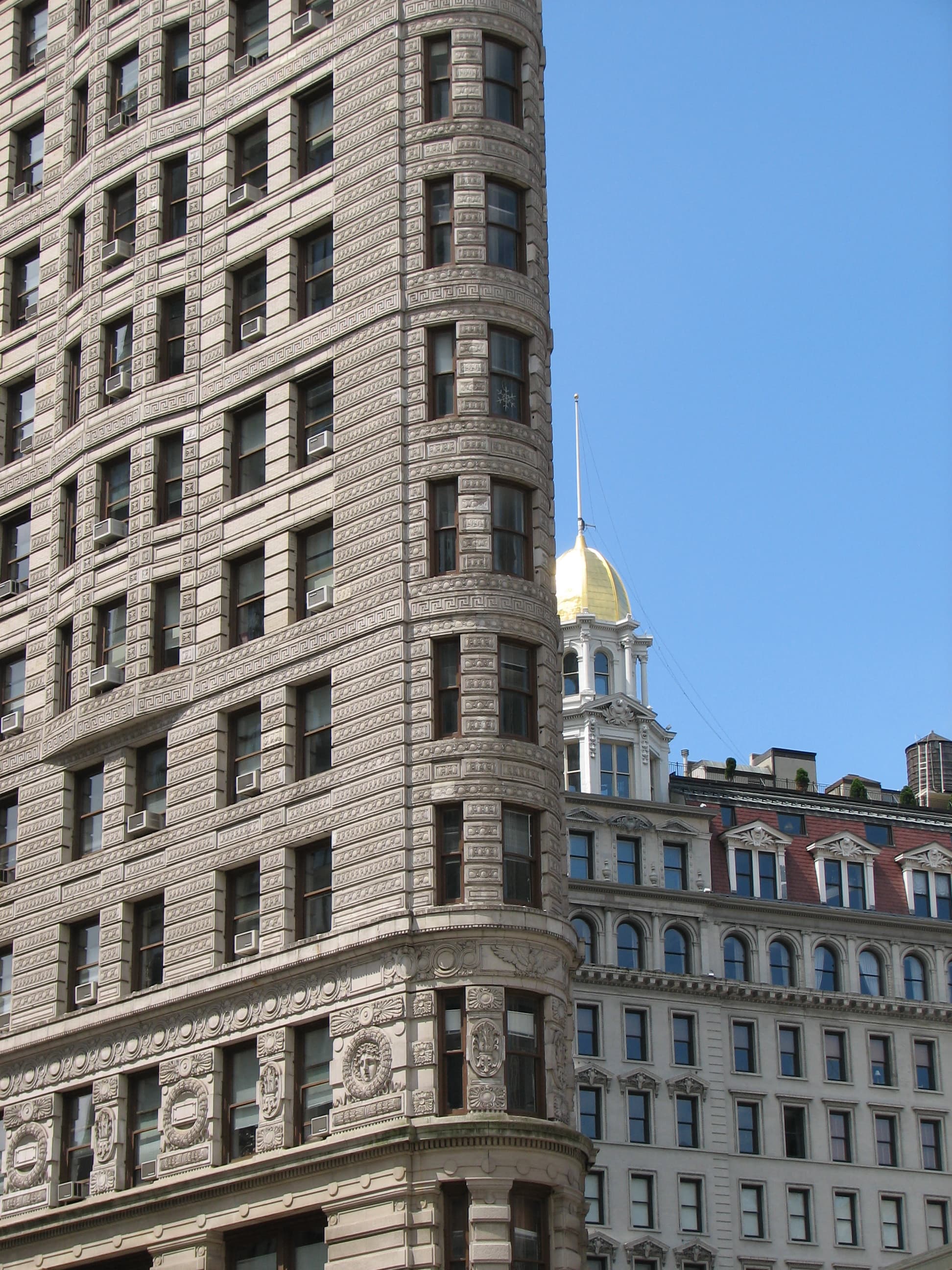
Start where the triangle becomes obvious
Begin on the Madison Square side and look south. From that distance, the Flatiron Building reads like a prow instead of a normal facade. That is the point: the building turns a difficult triangular block into a directional object.
The public visit is exterior-first. Unless you have a confirmed sales appointment or private access, treat the lobby and residences as off-limits and let the street do the work.
Do one slow loop instead of one snapshot
Walk the Broadway side, cross toward Fifth Avenue, then step back into Madison Square. The building changes faster than most landmarks because its mass narrows so sharply toward 23rd Street.
For photos, save the straight-on north prow first, then use the ornament close-ups as a second layer. The Flatiron is famous for its shape, but the surface detail is what keeps it from becoming only a silhouette.
Context beats crowding
The best Flatiron image usually includes street space, traffic, trees, or the park edge. A tight crop makes the building impressive; a wider crop explains why it became a New York symbol.
For a longer architecture walk, pair it with Ladies' Mile commercial facades, Madison Square Park, and the Met Life Tower view corridor.
Image: chrisinphilly5448, CC BY-SA 2.0, Wikimedia Commons